via: roberts
Notes:
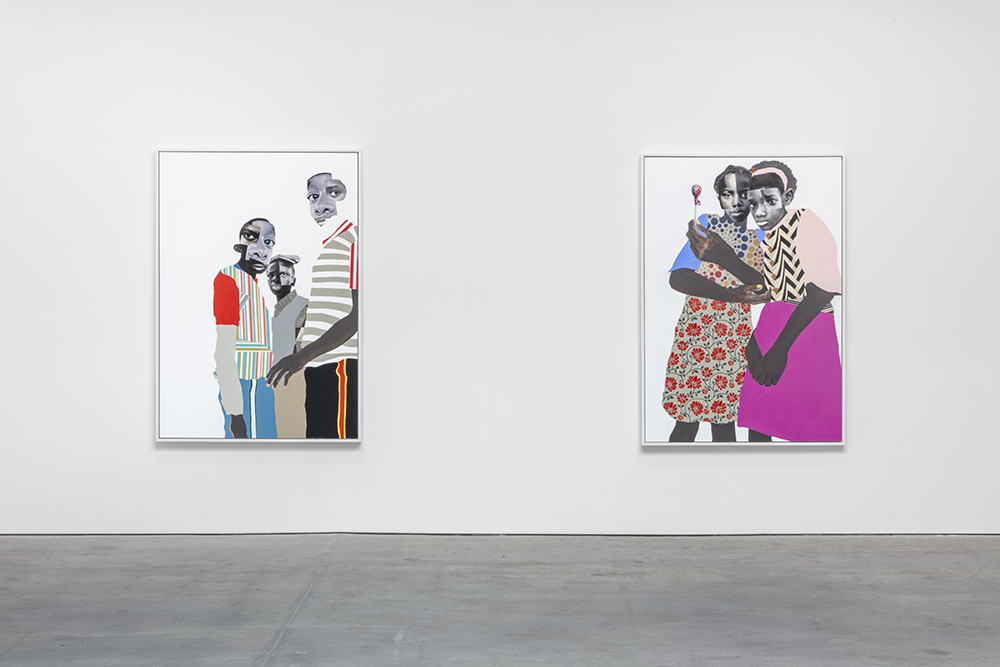
Deborah Roberts’ process operates through a rigorous methodology of fragmentation and reconstruction. Working primarily in mixed media—combining acrylic, paper collage, found imagery, and at times vintage photographs—she constructs portraits that deliberately resist visual coherence. Rather than seeking seamless integration, Roberts preserves the cut edge, the visible seam, the misalignment of scale. This aesthetic strategy foregrounds the constructed nature of identity, particularly as it relates to Black childhood. By juxtaposing oversized eyes, elongated limbs, or disjointed facial structures, she destabilizes traditional portrait conventions and interrupts the viewer’s desire for harmonious representation. The collage method becomes conceptual architecture: identity is not fixed, but assembled under cultural pressure.
Her sourcing of imagery—often culled from fashion magazines, art history references, and archival materials—reveals a critical engagement with visual culture. Roberts interrogates the historical absence and distortion of Black bodies in Western art traditions, and her compositional choices function as acts of reclamation. The exaggerated or displaced features in her works operate symbolically; they reference surveillance, hyper-visibility, vulnerability, and projection. Scale manipulation is particularly significant in her depictions of children. Large eyes may suggest imposed scrutiny, while disproportionate limbs can evoke both growth and instability. The tension between innocence and imposed adult perception becomes central to her visual thesis.
Formally, Roberts balances painterly abstraction with photographic precision. Areas of flat acrylic color contrast with hyper-detailed cut photographic elements, creating a dynamic surface oscillation between illusion and materiality. Negative space is often carefully preserved, allowing the figure to hover in ambiguous psychological terrain rather than a defined environment. This restraint heightens the psychological charge of the subject. Ultimately, her process is both surgical and poetic—deconstructing inherited visual narratives while reconstructing a more expansive framework for Black subjectivity.
- RJG // AI