
via: kaphar
Notes:
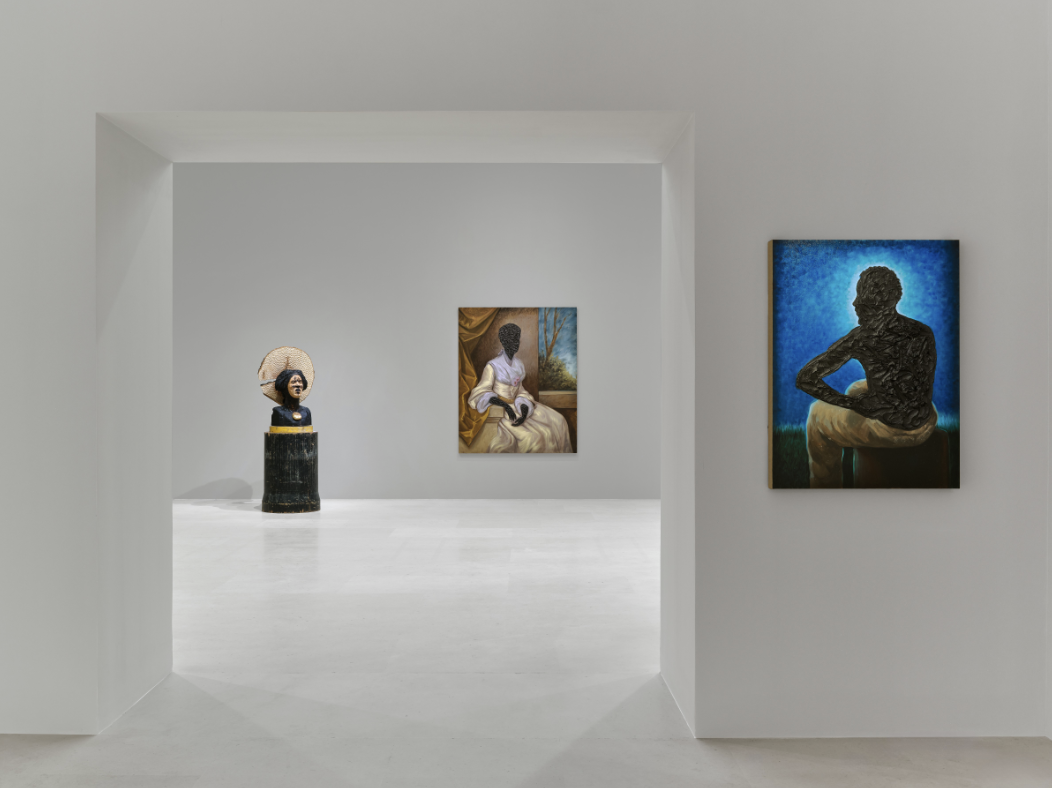
Titus Kaphar’s artistic process is grounded in a rigorous interrogation of Western art history and its embedded power structures. Rather than rejecting canonical imagery outright, Kaphar strategically enters it—appropriating, repainting, cutting, obscuring, or reconfiguring historical compositions to expose what and who has been marginalized. His process functions as both critique and revision: he treats the archive as a material to be physically altered, insisting that historical narratives are not fixed but constructed. This methodological approach positions his studio practice as a site of historical editing, where paint, canvas, and sculptural intervention become tools for ethical and political rebalancing.
A defining strength of Kaphar’s process is his use of material disruption as conceptual language. Acts such as cutting away figures, veiling faces with paint, or burying subjects beneath layers of canvas are not merely aesthetic gestures; they are procedural metaphors for erasure, suppression, and omission within historical record-keeping. His process often makes absence as legible as presence, forcing viewers to confront the violence of what has been excluded. Importantly, Kaphar does not replace one dominant narrative with another; instead, his process maintains tension, allowing contradictions to remain visible. This refusal of closure underscores the ongoing nature of historical reckoning rather than offering a false sense of resolution.
Finally, Kaphar’s process extends beyond the studio into pedagogy, architecture, and community engagement, reinforcing the idea that art-making is inseparable from institutional critique. His method demonstrates that representation alone is insufficient without structural interrogation—how museums collect, how histories are taught, and how visual authority is maintained. By merging conceptual rigor with painterly skill, Kaphar’s process resists didacticism while remaining accessible, emotional, and visually compelling. The result is a practice that operates simultaneously as aesthetic production, historical analysis, and civic intervention—positioning art not as illustration of injustice, but as an active mechanism for re-seeing and reordering cultural memory.
- RJG // AI