
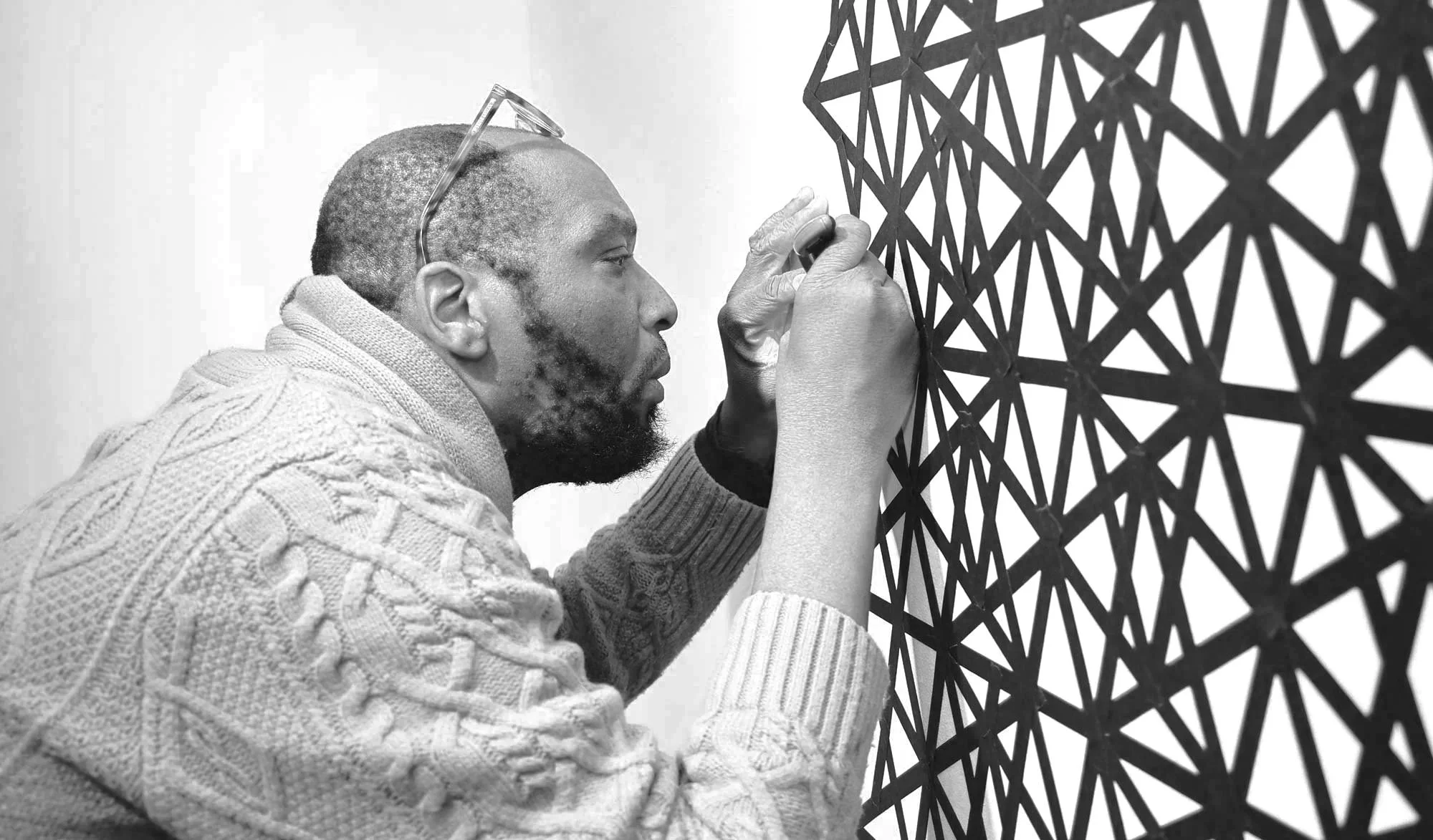
Biography
Conceptual artist Raishad J. Glover multidisciplinary practice examine the moral achievements of social forms, ecological systems, and abstract semiotics. Rooted in his Gullah Geechee heritage and Southern upbringing, his work integrates ancestral narratives with environmental and ready-made assemblage based from ethnic histories. Using photography, mirrored surfaces, collage, and mixed-media installations, Glover explores how identity, story telling, and theology evolve across generations.
He holds a Studio Diploma from the School of the Museum of Fine Arts at Tufts University and an MFA from the Yale School of Art at Yale University. Glover currently serves as Chair of the Visual Art Department at Holyoke Community College.
His process is grounded in optical research and experimentation, often beginning with personal archives to botanical references, and poetic rhetoric. These processes are translated into systems that incorporate reflection, fragmentation, synergy and earth work mediums. Series such as Echo Flow and the Gullah Geechee Mirror Series highlights his use of art materials as both strategic and conceptual coping devices, inviting viewers into dialogues around migration, kindred, and indigenous resilience.
His professional record includes selected exhibitions at prominent institutions such as the Gibbes Museum of Art in Charleston, SC, Jack Tilton Gallery in Manhattan, NY, and Howard Yezerski Gallery in Boston, MA. His work has also been featured in publications including Southern Living Magazine, Artnet, and Sculpture Magazine, among others. Represented by The George Gallery in Charleston, South Carolina, Glover continues to merge studio practice with pedagogy and community engagement, positioning art as a tool for cultural preservation, critical inquiry, and imaginative transformation.