
via: turrell
Notes:
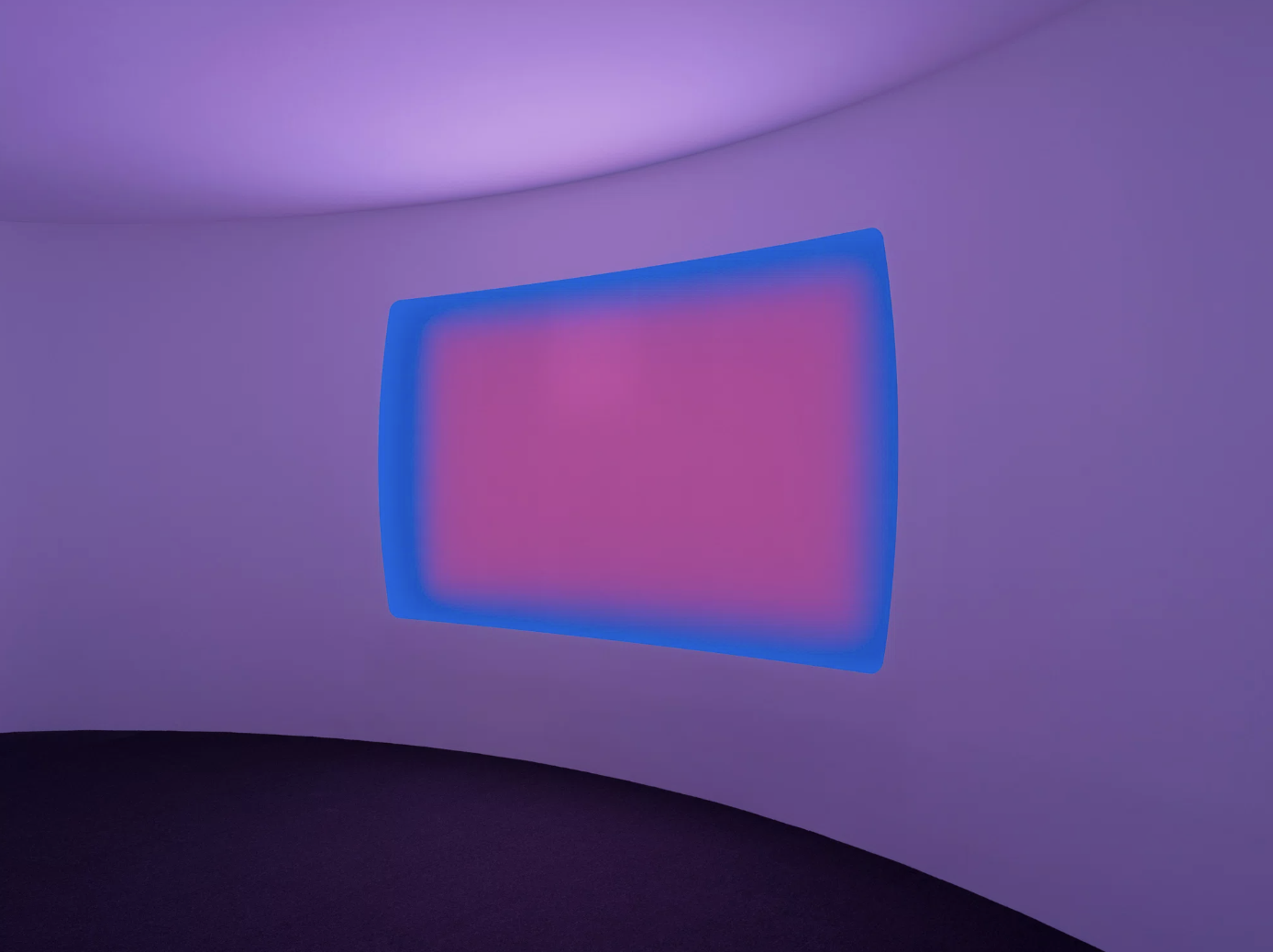
James Turrell’s artistic process begins with light, not simply as a tool for illuminating objects, but as the primary material of the artwork itself. Through carefully constructed rooms, openings, tunnels, and architectural spaces, Turrell removes familiar visual distractions so viewers can become aware of the act of seeing. His installations often create the illusion that light has weight, depth, and physical presence. By controlling color, brightness, scale, and spatial orientation, he transforms perception into a quiet but powerful experience.
A central strength of Turrell’s process is its patience. Many of his works require viewers to remain in one place long enough for their eyes to adjust to subtle changes in light. This gradual transformation challenges the speed and overstimulation of contemporary life. Works such as his Skyspaces frame the sky as though it were a constantly evolving painting, while the monumental Roden Crater connects human vision with celestial movement. His process suggests an idea similar to Immanuel Kant’s philosophy: we do not experience reality directly, but through the structures of human perception.
Turrell’s work is most compelling when it makes viewers question whether they are observing light or observing their own minds responding to it. Although the simplicity of his installations may initially appear empty, their restraint encourages deep attention and contemplation. His process depends upon architecture, technology, natural phenomena, and the active participation of the viewer. Ultimately, Turrell demonstrates that art does not always need to represent an object or tell a story; it can instead create a condition in which perception itself becomes the subject.
- RJG//AI