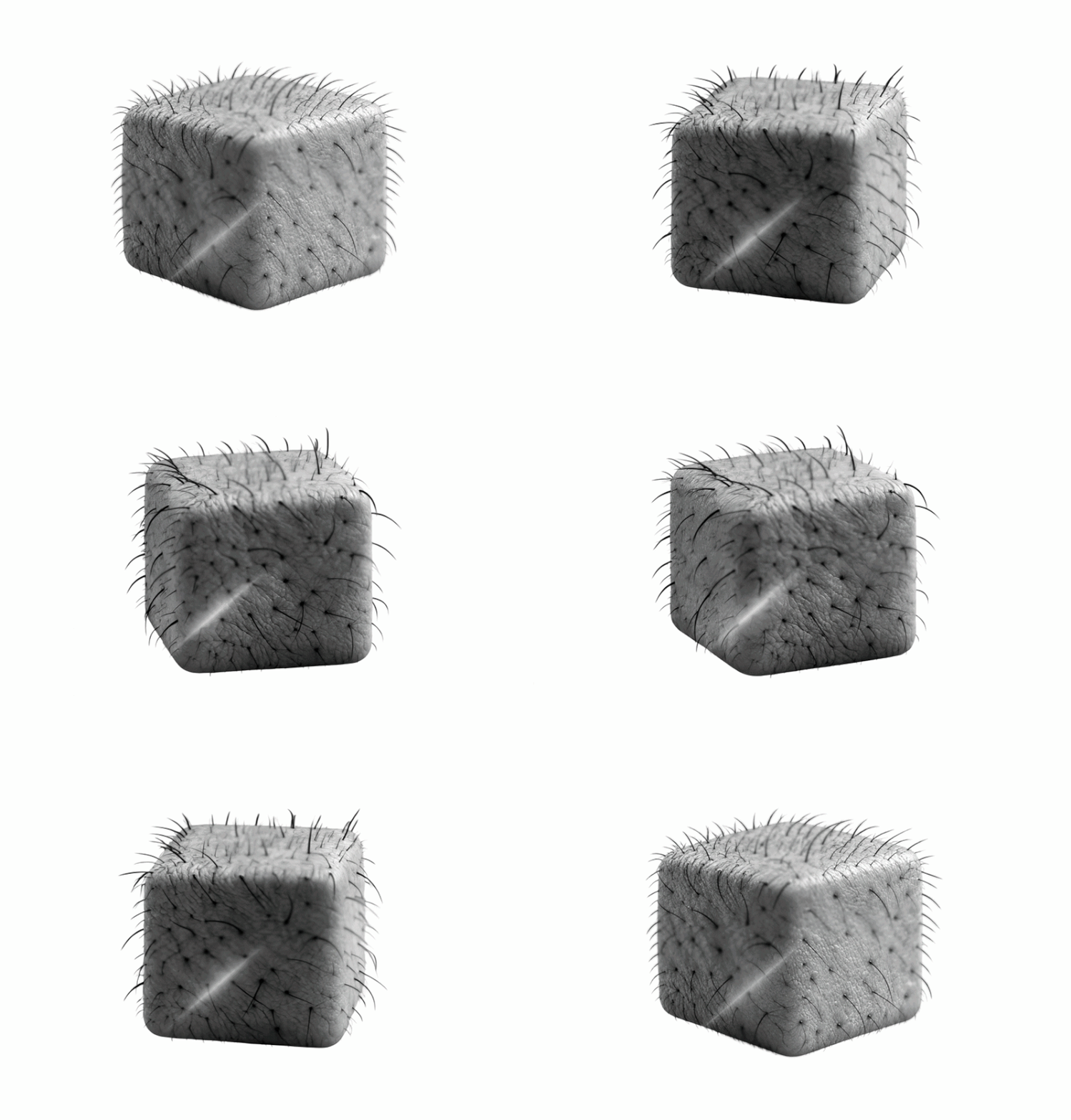
via: morelos
Notes:
Delcy Morelos's artistic process is rooted in an intimate relationship with the earth, where natural materials become both medium and meaning. Moving beyond traditional painting, Morelos constructs immersive installations using soil, clay, hay, plant fibers, spices, and organic pigments to create environments that engage sight, smell, touch, and spatial awareness. Rather than presenting nature as a subject to be represented, she allows the physical presence of the earth itself to become the artwork. This material-centered approach reflects Andean Indigenous cosmologies that understand the earth as a living entity rather than a resource to be extracted. Her process is slow, labor-intensive, and collaborative, emphasizing careful hand-building and a deep sensitivity to the physical and spiritual qualities of her materials.
One of the strongest aspects of Morelos's process is her ability to transform simple, elemental materials into emotionally and psychologically powerful experiences. The scale of her installations encourages viewers to move through the work rather than simply observe it, dissolving the boundary between sculpture, architecture, and landscape. The incorporation of fragrances such as cinnamon and cloves further activates memory and bodily perception, reinforcing her belief that art should be experienced through the entire body. While her minimalist aesthetic appears restrained, the conceptual framework is layered with references to colonial histories, environmental exploitation, displacement, and humanity's fractured relationship with nature. The effectiveness of her process lies in its refusal to rely on spectacle or technological intervention; instead, it uses the quiet power of organic matter to create profound sensory and philosophical encounters.
Morelos's process ultimately challenges conventional definitions of sculpture by prioritizing impermanence, ecology, and lived experience over permanence and objecthood. Her installations often evolve throughout an exhibition as moisture, scent, texture, and even living plants change over time, reinforcing the cyclical nature of growth, decay, and regeneration. This willingness to embrace transformation rather than preservation distinguishes her practice from many contemporary installation artists. Although some viewers may find the conceptual symbolism subtle or the visual language intentionally restrained, these qualities are fundamental to her objective of fostering contemplation rather than immediate visual impact. Her process succeeds because it invites audiences to reconsider their relationship with the land, demonstrating that the earth itself possesses memory, agency, and the capacity to communicate through material presence.
- RJG//AI