
via: brown
Notes:
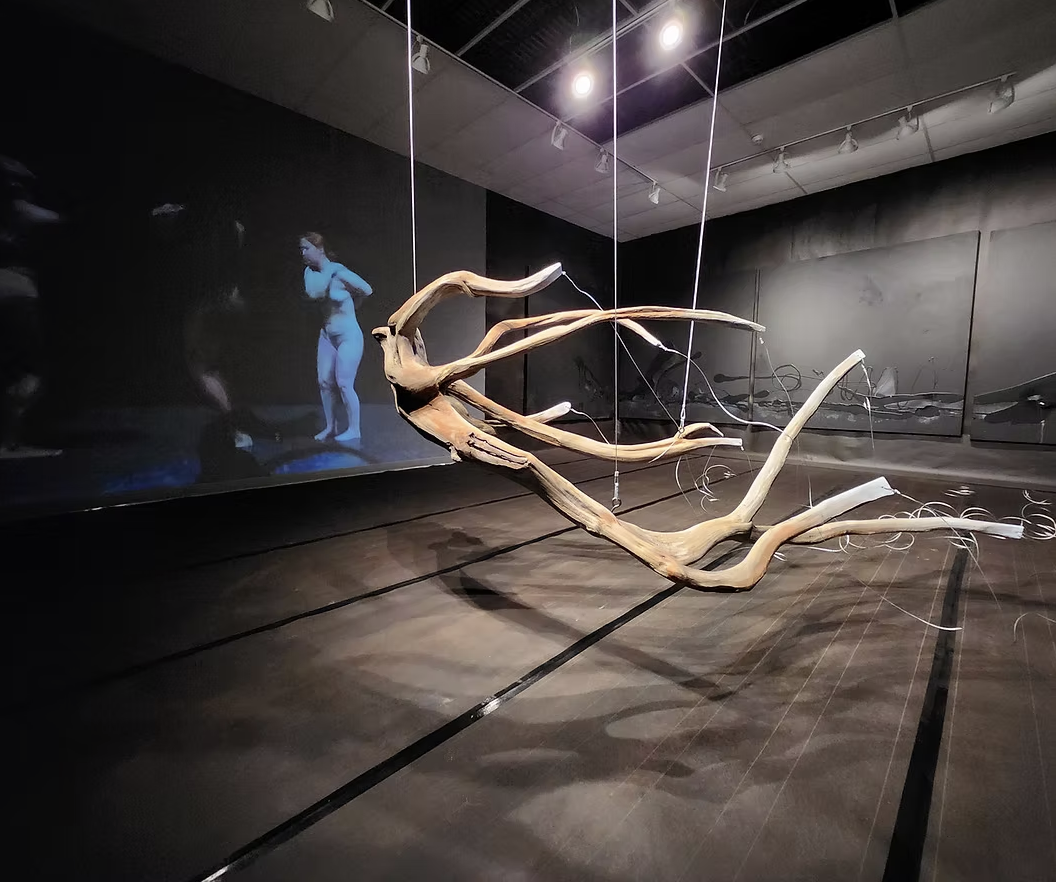
Michaela Pilar Brown’s artistic process operates as a profound act of excavation—one that navigates the layered terrain of memory, identity, and ancestral presence with both sensitivity and rigor. Her use of found materials, textiles, and domestic objects transforms the ordinary into vessels of cultural testimony. Rather than treating materials as passive carriers, Brown activates them as living archives, embedding within them the quiet yet persistent echoes of personal and collective histories. Her process resists linear narratives, instead embracing fragmentation and accumulation, allowing meaning to emerge through juxtaposition, repetition, and spatial dialogue. This methodology situates her work within a lineage of artists who treat assemblage not merely as form, but as a critical language of remembrance and resistance.
What is particularly compelling about Brown’s practice is her commitment to honoring the unseen labor and interior lives of Black women. Her process becomes an embodied form of storytelling—intuitive, tactile, and deeply relational. Through stitching, layering, and arranging, she constructs visual environments that feel both intimate and expansive, as though the viewer has entered a space where time folds in on itself. The tactility of her materials—worn fabrics, weathered surfaces, and hand-worked elements—invites a slow, contemplative engagement. In this way, her process challenges the speed and disposability often associated with contemporary image culture, instead foregrounding care, patience, and intentionality as radical acts.
Ultimately, Brown’s artistic process is not just about making objects—it is about constructing systems of meaning that bridge past and present, the personal and the communal. Her work offers a model for how artists can engage deeply with their cultural inheritance while simultaneously expanding the formal possibilities of contemporary art. There is a quiet power in her restraint, a confidence in allowing materials and histories to speak without overdetermination. In doing so, Brown creates a space for reflection, healing, and recognition—reminding us that art, at its most resonant, is not only seen but felt, remembered, and carried forward.
- RJG // AI