
via: adams
Notes:
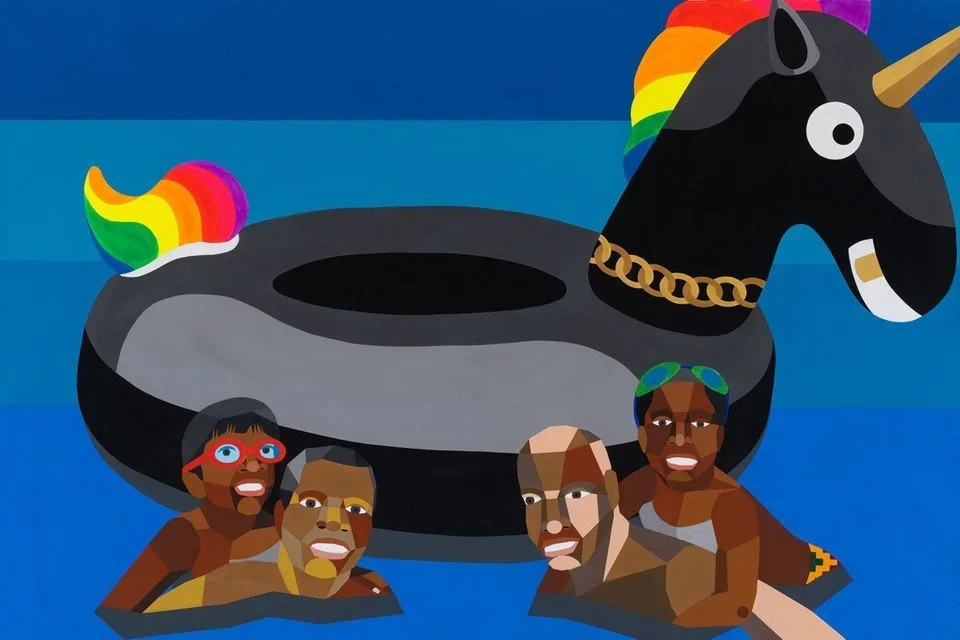
Derrick Adams’s geometric painting process transforms the human figure into an arrangement of angular planes, contrasting colors, and sharply defined shapes. His faceted faces suggest that identity can be constructed through multiple visual relationships, with each section contributing to a recognizable yet complex whole. Although these forms invite comparisons to Cubism, Adams identifies African masks and sculpture, including Benin heads and Kota reliquary figures, as foundational influences. This connection gives his geometry cultural specificity: abstraction becomes a means of expressing Black individuality through structure, proportion, and color. Cleveland Museum of Art
The relationship between painting and collage gives Adams’s process much of its visual energy. In works combining acrylic paint with fabric, shifts between painted color and textile pattern establish a rhythm across bodies, clothing, and surrounding space. The resulting surfaces encourage the viewer to move between recognizing a person and examining how that image is assembled. In the Floaters works, this structured approach supports scenes of leisure, allowing geometric bodies to convey ease and buoyancy. I read the tension between angular construction and relaxed gesture as particularly effective: carefully organized shapes make room for pleasure, intimacy, and everyday Black life. Gagosian
A productive tension in Adams’s approach lies between his recognizable geometric vocabulary and the individuality of each subject. Repeated faceting and bold color divisions can risk making different figures feel visually uniform, especially when the surface’s graphic appeal dominates the encounter. His strongest portraits counter this through distinctive hairstyles, varied skin tones, facial proportions, and attitudes—differences central to his Style Variations paintings. These details make geometry responsive to personal expression. Ultimately, Adams’s achievement is his ability to give formal discipline an accessible emotional presence, inviting viewers to consider how an image can communicate both a shared cultural experience and a person’s control over their own visibility. Cleveland Museum of Art
- RJG//AI